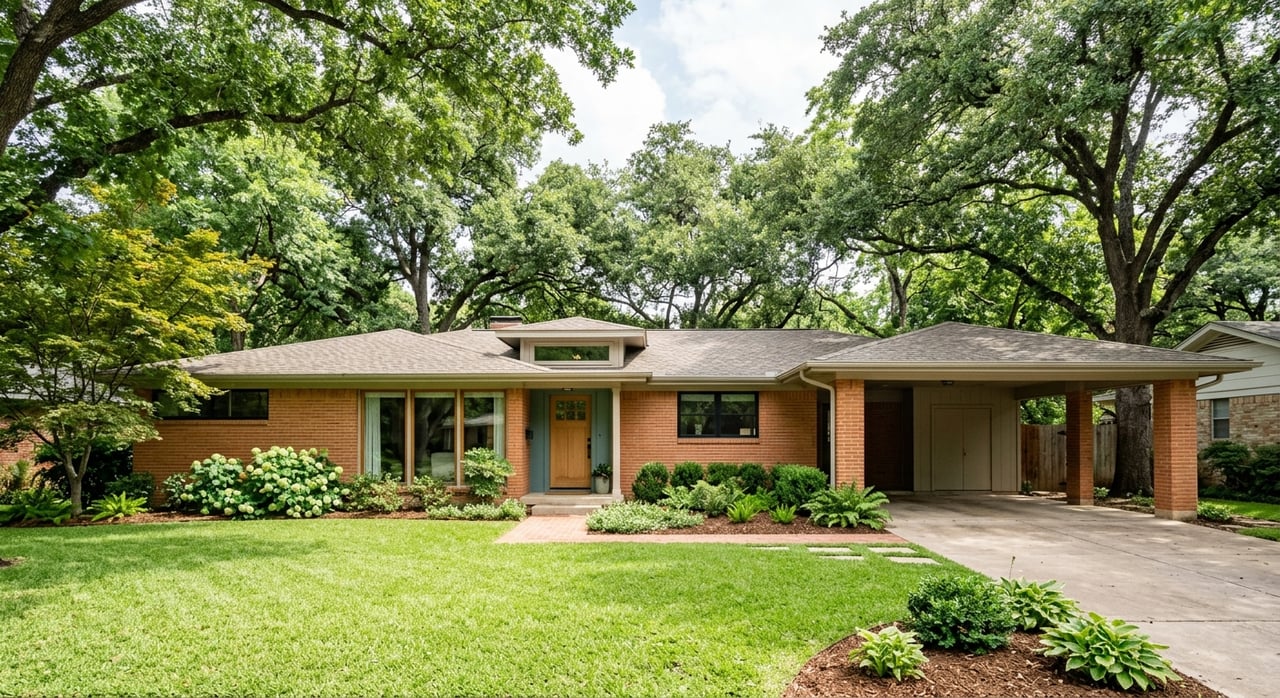
If you want more house, more yard, and a closer-in Dallas location without chasing some of the city’s highest price points, Wynnewood Hills and Glen Oaks deserve a closer look. These are the kinds of neighborhoods many buyers pass over at first, often because the geography is a little misunderstood and the housing stock is older. But if you care about value, lot size, and long-term potential in south Oak Cliff, this pocket can make a strong case. Let’s dive in.
Why this area stands out
The smartest way to think about Wynnewood Hills and Glen Oaks is as a 75224-adjacent south Oak Cliff value story, not as neighborhoods fully inside 75224. Current listing examples commonly place both areas in 75232, while 75224 works better as the nearby retail and transit anchor tied to Wynnewood Village and Hampton Station. That distinction matters because it gives you a more accurate picture of both location and pricing.
This is also a useful central-south Oak Cliff frame if you want access to Bishop Arts, downtown Dallas, and improving local amenities without paying the same prices found in stronger central Dallas submarkets. The City of Dallas recognizes both neighborhood organizations, and its Neighborhood Plus plan identifies Red Bird as a revitalization target area, which supports the broader momentum story in this corridor. You can review the city planning context in the Dallas neighborhood planning materials.
The value play in plain terms
The core appeal here is simple: you may get more land and more home for your money than in better-known close-in Dallas neighborhoods. That is especially relevant in a market where affordability remains a real challenge for many buyers.
According to Redfin’s 75224 housing market data, the median sale price in 75224 was $328,000 in February 2026, compared with $410,000 for Dallas and $475,000 in 75208. The same source shows recent neighborhood-level figures around $225,000 for Glen Oaks and $272,000 for Wynnewood, while a separate neighborhood source places Wynnewood Hills at $335,987. The exact number can vary by source and boundary, but the direction stays consistent: this area generally prices below Dallas overall and well below more expensive nearby submarkets.
That gap matters even more when you look at broader affordability. A February 2026 Redfin affordability release said Dallas buyers need about $112,175 in annual income to afford the city’s median-priced home, with a typical monthly housing payment around $3,191. For buyers who want to stay closer in without stretching to the citywide median, that makes overlooked neighborhoods like these worth serious attention.
What Wynnewood Hills feels like
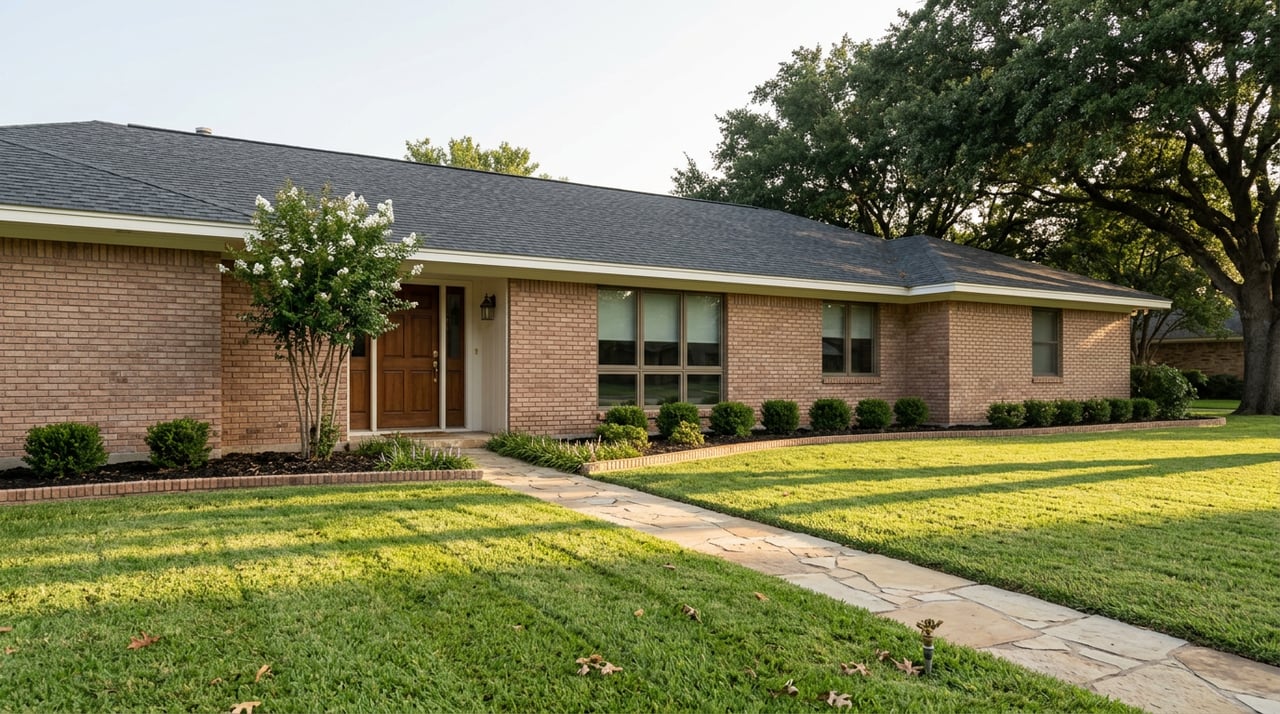
Wynnewood Hills reads as a classic older Dallas subdivision with larger single-family homes, wider lots, and a strong mid-century presence. Third-party neighborhood data describe most homes as dating from 1958 to 1968, typically spanning 1,831 to 3,504 square feet with 3 to 5 bedrooms. That is a useful baseline if you are trying to compare it with smaller-lot neighborhoods closer to the urban core.
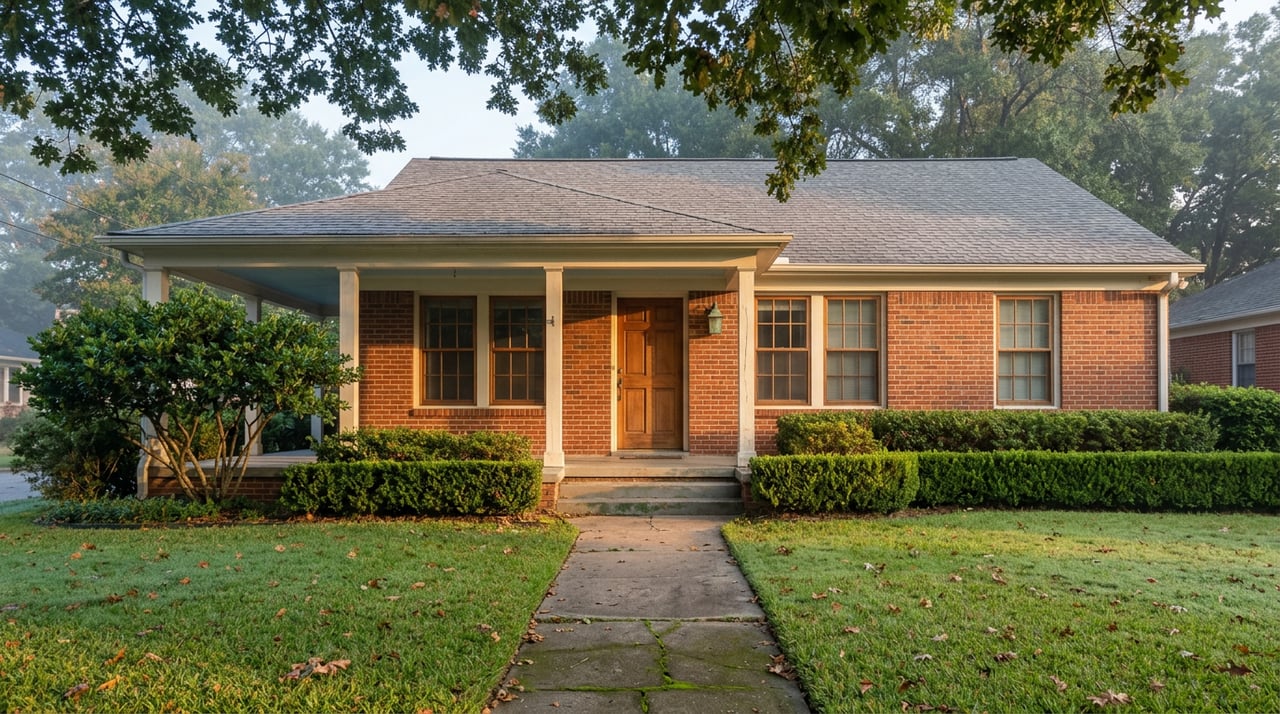
Recent listing examples reinforce that picture. One home shows a 0.343-acre lot with dimensions of 100 by 151 feet and a 1959 build year, while another reflects a 0.35-acre lot and a 1964 build year. A separate listing describes a one-story mid-century ranch on an oversized 0.42-acre lot, about 14 minutes from Bishop Arts, which helps illustrate the blend of space and access that draws buyers here.
The takeaway is not that every home looks the same. It is that Wynnewood Hills tends to offer a combination of older architecture, larger parcels, and renovation upside that can be harder to find at similar prices elsewhere. You can explore the neighborhood overview on Neighborhoods.com’s Wynnewood Hills page.
What makes Glen Oaks different
Glen Oaks is more architecturally varied than many buyers expect. Local coverage notes the neighborhood developed over roughly 15 years during the 1950s and 1960s, with styles ranging from neoclassical and European mansard to Spanish Tudor, and with many homes originally custom-built to suit the owner.
That means Glen Oaks is better described as a mid-century custom neighborhood with many ranch-style examples, not a one-note ranch subdivision. Recent sales and listings support that range, including a sold home built in 1957 on a nearly quarter-acre lot, another built in 1971, and a recent listing on a 0.3-acre corner lot. If you like character but still want room to personalize a home over time, that mix can be appealing.
Bigger lots are part of the story
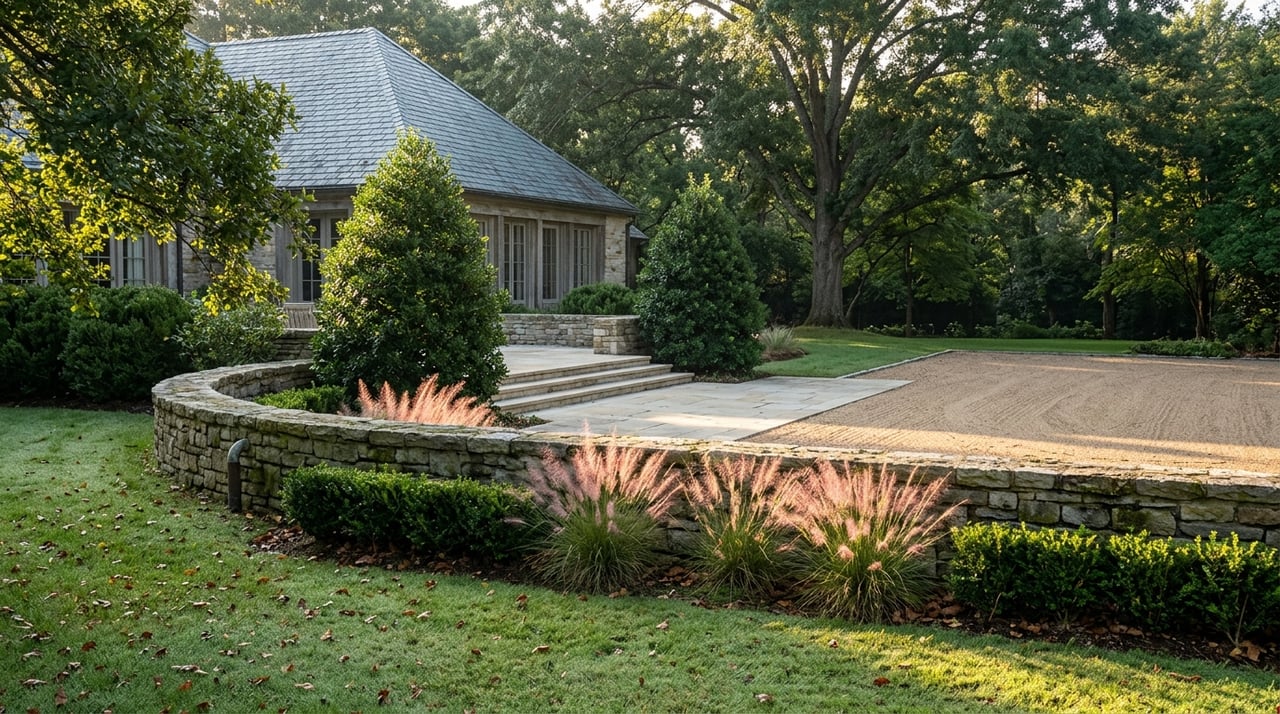
Yes, the larger-lot narrative is real. Current examples show lots around 0.3 to 0.42 acres in Glen Oaks and roughly 0.343 to 0.35 acres in Wynnewood Hills, with some larger parcels appearing in active listings. In practical terms, that can mean wider setbacks, more usable backyards, and more breathing room between homes.
For many buyers, that changes the value equation. A lower purchase price is helpful, but a lower price paired with more land is what really makes these neighborhoods stand out. If you have been comparing options in more recognized central Dallas neighborhoods, this is where the math can start to look compelling.
Access to Bishop Arts and downtown
A value play only works if the location still supports your day-to-day life. Here, the access story is better than many people assume.
Current listing copy places Wynnewood Hills roughly 10 to 14 minutes from Bishop Arts, depending on the property. For transit and connectivity, the Oak Cliff Red Line corridor includes DART’s Hampton and Tyler/Vernon stations, while the Dallas Streetcar provides direct service between downtown Dallas and the Bishop Arts District.
The nearby amenity base is also improving in a visible way. Brixmor reports that Wynnewood Village is undergoing a $52 million redevelopment that includes a 111,000-square-foot Target and a 26,000-square-foot Burlington, and the center is about 4 miles south of downtown Dallas. For buyers thinking a few years ahead, that kind of retail investment adds weight to the broader neighborhood story.
Why this remains overlooked
Part of the reason these neighborhoods still feel undervalued is that the map is not always clean. Public sources can blur the lines between Wynnewood, Wynnewood Hills, Glen Oaks, 75224, and 75232. That can make neighborhood-level pricing feel inconsistent and can cause buyers to skip over the area during an online search.
Another factor is the housing stock itself. These are older homes, and older homes require a more thoughtful eye. Some are fully updated, others preserve original details, and some still need meaningful work. That tends to create opportunity for buyers who are comfortable balancing character, condition, and renovation quality.
What buyers should watch closely
If you are considering Wynnewood Hills or Glen Oaks, focus less on broad labels and more on the specific home. Because the homes vary so much, the best values often come down to details like lot width, floor plan, update quality, mechanical systems, and how well the property has been maintained over time.
A few smart points to compare include:
- Lot size and shape
- Original versus updated condition
- One-story versus larger custom layouts
- Street feel and surrounding homes
- Access to retail, transit, and major routes
It also helps to keep neighborhood pricing in context. Some local data sets are based on a small number of sales, so month-to-month swings can look larger than they really are. That is one reason hyperlocal guidance matters in areas where boundaries and housing types are less uniform.
A better long-term lens
This is not a market to describe with hype. The stronger, more accurate case is that these neighborhoods feel established, improving, and still accessible. The sources support a value story and an amenity story, but not certainty or guaranteed appreciation.
For buyers, that means you should view Wynnewood Hills and Glen Oaks as a longer-term play on location, land, and neighborhood momentum. For sellers, it means presentation and positioning matter because buyers are comparing not just price, but also condition, architectural character, and the amount of usable outdoor space.
If you want help comparing Wynnewood Hills, Glen Oaks, and the broader Oak Cliff corridor with a sharper neighborhood lens, Hewitt+Saucedo Realty Group offers the kind of local, client-first guidance that can help you sort through both on-market and curated opportunities with more clarity.
FAQs
Are Wynnewood Hills and Glen Oaks actually in 75224?
- Not exactly. Current listing examples commonly place both neighborhoods in 75232, while 75224 is better understood as the nearby retail and transit anchor tied to Wynnewood Village and related Oak Cliff search geography.
Why are Wynnewood Hills and Glen Oaks considered a Dallas value play?
- They generally show lower price points than Dallas overall and well below 75208, while still offering older homes, larger lots, and close-in south Oak Cliff access.
How close are Wynnewood Hills and Glen Oaks to Bishop Arts?
- Current listing examples place Wynnewood Hills about 10 to 14 minutes from Bishop Arts, and the Dallas Streetcar connects downtown with the Bishop Arts District.
Are lot sizes in Wynnewood Hills and Glen Oaks really larger?
- Yes. Recent examples show lots around 0.3 to 0.42 acres in Glen Oaks and about 0.343 to 0.35 acres in Wynnewood Hills, which supports the larger-lot appeal.
What kind of homes are common in Wynnewood Hills?
- Wynnewood Hills is best known for mid-century single-family homes from roughly 1958 to 1968, often with 3 to 5 bedrooms, larger footprints, and wider lots.
What kind of architecture should you expect in Glen Oaks?
- Glen Oaks includes a mix of custom mid-century-era homes, with styles ranging from neoclassical and European mansard to Spanish Tudor, plus many ranch-style examples.
Is this area better for short-term flips or long-term buyers?
- Based on the older housing stock, price points, and nearby redevelopment activity, the area reads more like a long-term neighborhood-improvement play than a pure short-term flip market.